
How India’s Construction Industry Has Evolved Since Independence

Table of Contents
The country’s construction industry has played a central role in its transformation since Independence in 1947. India had very little industrial capacity, no rail, no population density and not much modern infrastructure at the time of independence. Building Construction therefore became a major element of nation-building.
During the early decades, the government was the most important client and promoter of construction. It was the Five-Year Plans that developed large dams, irrigation systems, steel plants, roads, railways, power stations, public buildings and planned cities in India. The First Five-Year Plan began in 1951 and put emphasis on agriculture, irrigation and recovery whereas the Second Plan put emphasis on heavy industry and industrial infrastructure.
Over the decades, the Indian construction industry has moved away from labour-intensive and traditional methods of construction towards mechanisation, special engineering, private-sector participation, digital design, prefabrication, Building Information Modelling (BIM), advanced surveying and sustainable construction. In fact, the industry is involved in mega infrastructure projects such as expressways, metro lines, airports, high-speed rail, tunnels, bridges, smart cities and urban developments.
The Construction Industry in Post-Independence India
Instantly after Independence, the construction sector of India was hit with a crisis. Construction equipment was very basic, skilled labor in short supply, and many materials and technologies had to be developed in India. The government therefore assumed a leading role in the construction of infrastructures.
Improving irrigation, agriculture, power generation, transport and industrial capacity were of major importance. CPWD, State Public Works Departments, Indian Railways, highway authorities and public-sector engineering firms were also active in construction.
The period also witnessed the development of institutions that provided technical manpower for the industrialisation of the country. The establishment and expansion of engineering institutions like the IIT system gave engineers the ability to take on increasingly complex projects.
The 1950s–1970s: Building the Foundations
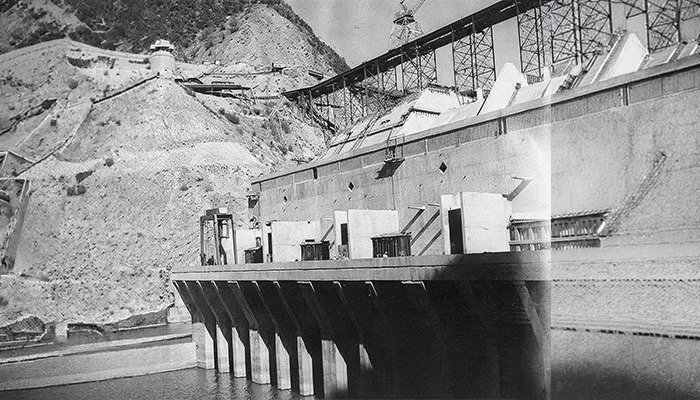
The 1950s and 1960s were the earliest foundation years of independent India. The largest multi-purpose river valley projects, like Bhakra-Nangal, Hirakud and Damodar Valley were primarily focused on irrigation, flood control and electricity.
Bhakra-Nangal Project was one of the most important symbols of India’s early development. In need of huge quantities of concrete, steel and machinery, it showed the country’s increasing ability to execute large engineering projects.
Industrial construction also expanded rapidly. The steel works at Bhilai, Rourkela and Durgapur became the symbols of India’s industrialisation. Power plants, factories, railways and public buildings were built during this period.
The construction of Chandigarh was another milestone. Chandigarh was planned as a modern city following Partition and introduced modern urban planning and architecture on a large scale. Its Capitol Complex became internationally celebrated for its architectural quality.
In Bengaluru, Vidhana Soudha, completed in 1956, was one of India’s most distinctive post-Independence government buildings. The LIC Building in Chennai, completed in 1959, was another landmark building and one of the earliest high-rise buildings constructed in India.
Construction during the period was much more government-driven. Projects were generally planned over long periods, and focused on public infrastructure, government buildings, industrial development and basic services rather than commercial real estate.
The 1980s–1990s: Modernisation and Economic Reforms
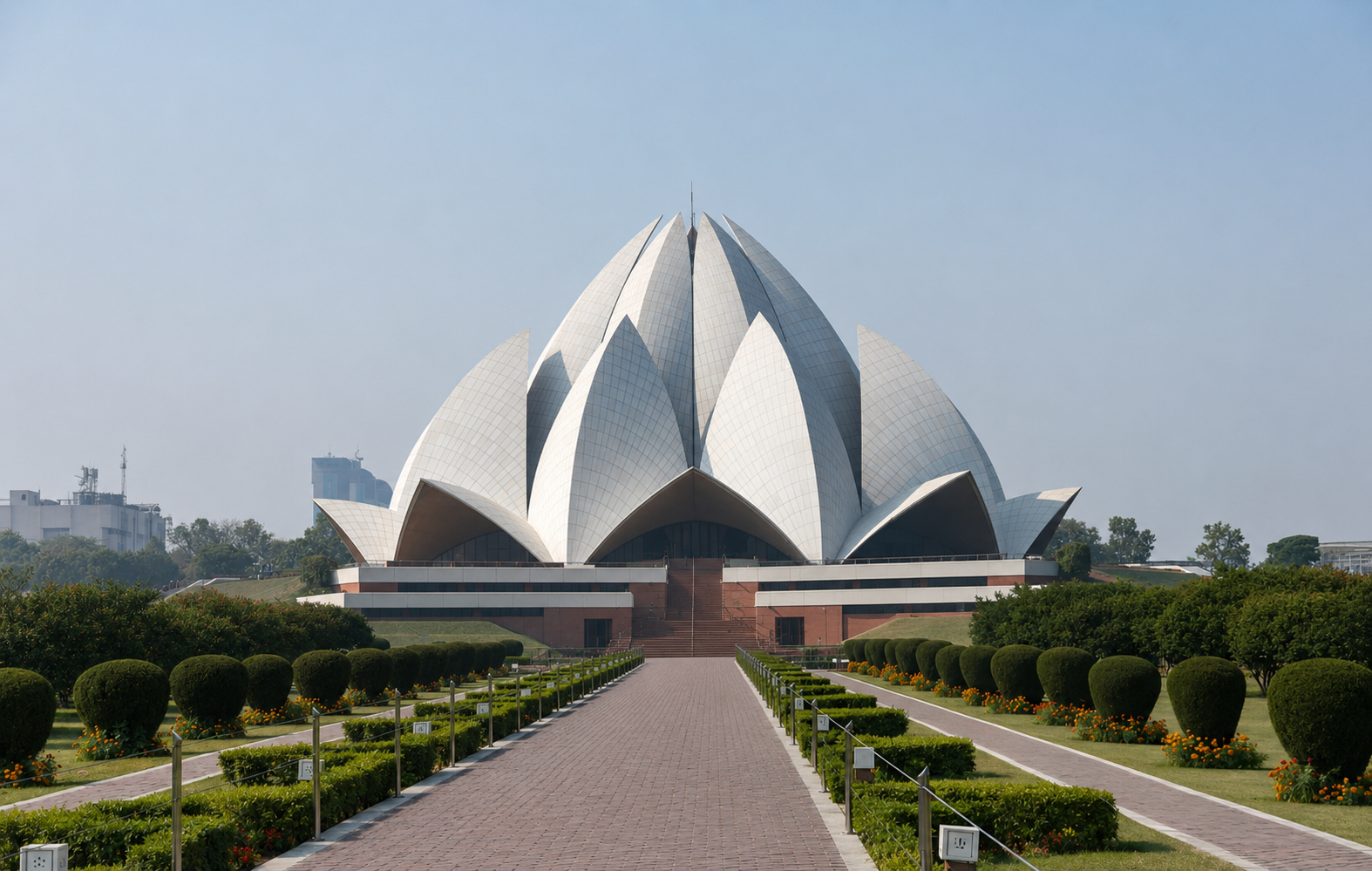
In the 1980s, the construction industry became increasingly mechanised and technologically sophisticated. Heavy equipment, advanced concrete technology, modern structural engineering and project management facilitated the construction industry’s growth.
The 1980s saw the construction of a number of high-profile residential and public buildings. The 1986 Lotus Temple in New Delhi, built to an international standard, became a benchmark of modern architecture with its curvilinear geometry and concrete structure.
The Hall of Nations in New Delhi, which opened in 1972, was an early case study in the utility and durability of large-span reinforced concrete. Designed by Raj Rewal and constructed for the government, it marked a turning point in the country’s modern exhibition and public architecture.
A further example of the role of architecture and building practices in India came with the Jawahar Kala Kendra in Jaipur, designed by Charles Correa in the early 1990s.
A major turning point came with the economic reforms of 1991. Liberalisation, privatisation and globalisation increased the private participation in infrastructure and real estate. The construction industry began receiving more investment from private companies, financial institutions and international partners.
Road development also began to gain attention. The development of the Mumbai–Pune Expressway signaled India’s shift toward modernized highways and controlled-access roads, while the Konkan Railway, which was completed in 1998, was another large-scale project involving extensive bridges and tunnels through difficult terrain.
The 2000s: Rapid Urbanisation and Infrastructure Growth
The construction industry of India witnessed a remarkable boom during the 2000s. Rapid growth and urbanization brought about the unprecedented demand for residences, commercial properties, roads, airports, metro lines, and even industrial complexes.
The emergence of a metropolitan transport system through the metro rail was another significant event. The Delhi Metro Rail built by Delhi Metro Rail Corporation (DMRC) brought revolution to the mode of transport in the capital city. The first line of this network opened in 2002 and demonstrated to the world the ability of India to develop and run such advanced modes of transport.
Highway construction was also on the rise with an increased construction of bridges, flyovers and expressways in big cities.
The completion of the Bandra-Worli Sea Link in Mumbai was yet another landmark of Indian engineering in 2009. This project of the long-span bridge required construction of a bridge in cold water and demonstrated India’s engineering capabilities in the field of bridge engineering.
Modern terminals of airports were constructed in Delhi, Mumbai, Bengaluru and other cities during this period by leading construction companies.
Commercial buildings also grew to be big and grandiose. DLF Cyber City in Gurgaon and the Parliament Library Building in New Delhi constructed in 2002 are some of the best examples of such buildings.
Infosys’ campuses in Bangalore and other places have emphasized the need for large technology-office campuses because of growth in the IT sector in India.
The 2010s: Technology, Smart Cities and Sustainable Construction
During the 2010 decade, the construction sector in India adopted technology like Computer-Aided Design (CAD), GPS surveys, improved software for project management, advanced structural analysis and documentation.
Building Information Modeling (BIM) gained momentum in construction, for example, in complex infrastructure and building projects. BIM is a way to facilitate coordination of projects involving architects, structural engineers, MEP engineers, contractors and clients on the common digital model.
Smart Cities Mission 2015 has forced the Indian cities to focus on transportation, utilities, digital infrastructure and urban services. The construction sector has started focusing more on concepts of energy efficiency, green buildings, waste management and sustainable urban development.
During the 2010 decade, India has constructed many large infrastructure projects and buildings demonstrating the growth of its construction capacity.
Delhi Airport Terminal 3 was an example of a new large airport infrastructure project. It was a project of the GMR-led consortium that had large scale passenger terminal facilities and advanced structural and building services.
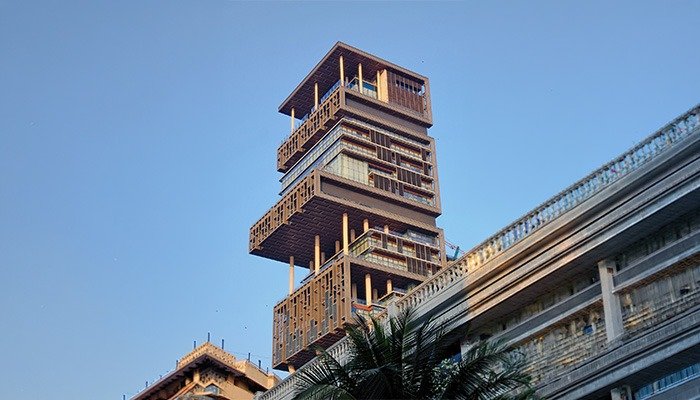
Antilia is a boutique residential apartment block in Mumbai that was constructed in 2010. It has become an example of the modern high-rise residential architecture and building engineering.
The successful erection of the Statue of Unity in 2018 proved that Indian contractors were capable of executing technologically challenging projects like large-scale constructions. Larsen & Toubro were the principal contractors for this project.
Use of precast concrete, modular construction, advanced formworks, drones, and enhanced safety systems became increasingly popular in the construction industry.
The 2020s: Mega Projects and Digital Transformation
In the 2020s, infrastructure projects all over India have received massive investment and rapid execution and digitization. Large urban developments, expressways, airports, freight corridors, tunnels, high-speed railroads, and metro networks are being constructed in the country.
Besides, throughout various phases of project execution, people are leveraging digital technologies, including drones for construction surveys, as well as BIM and digital project management software for coordination purposes. Artificial intelligence, automation, data analytics, and digital twins are presently becoming useful for construction planning and project execution.
A good example of modern architecture is the New Parliament Building in New Delhi, which was completed in 2023 and designed by HCP Design, Planning, and Management and constructed by Tata Projects under architect Bimal Patel.
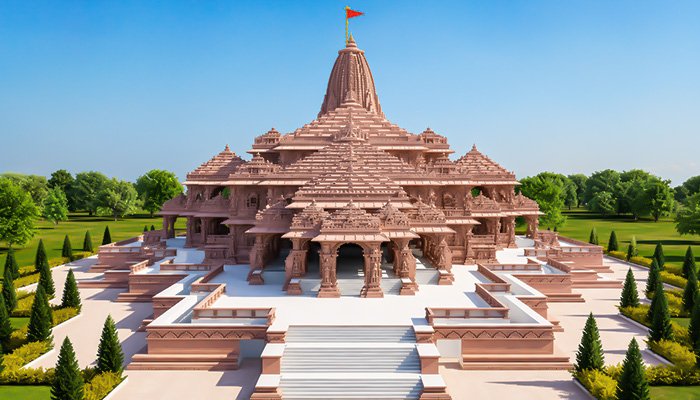
Another significant construction project is the Ram Mandir in Ayodhya that was consecrated in 2024. It displays the use of traditional Indian forms of architecture with modern techniques and is being constructed by Larsen & Toubro.
Undoubtedly, one of the most challenging engineering projects in India is the Mumbai-Ahmadabad High-speed Rail Project, which involves building tunnels, bridges, tracks, and stations and represents a major step in implementing high-speed rail technology in India.
In the early 2030s, the construction industry started adapting engineering practices, automation techniques, digital management systems, and sustainable approaches.
Major Landmark Buildings Constructed After Independence
Since India got its independence, the country has had numerous exemplary buildings that showcase the changes in architecture, construction methods, and the economy of India. Moreover, there is a list of significant buildings constructed in the country after the year of 1947.
|
Building |
Location |
Year Completed |
Architect / Construction Organisation |
|
Vidhana Soudha |
Bengaluru, Karnataka |
1956 |
Kengal Hanumanthaiah; Karnataka Public Works Department |
|
LIC Building |
Chennai, Tamil Nadu |
1959 |
Life Insurance Corporation of India / Indian construction agencies |
|
Hall of Nations |
New Delhi |
1972 |
Architect Raj Rewal; construction through CPWD |
|
Lotus Temple |
New Delhi |
1986 |
Architect Fariborz Sahba; construction by Larsen & Toubro (ECC) |
|
National Crafts Museum |
New Delhi |
1990s |
Architect Charles Correa |
|
Jawahar Kala Kendra |
Jaipur, Rajasthan |
1992 |
Architect Charles Correa |
|
Parliament Library Building |
New Delhi |
2002 |
Architect Raj Rewal; construction through CPWD |
|
Infosys Campus Buildings |
Bengaluru and other cities |
1990s onward |
Infosys with various architectural and construction organisations |
|
DLF Cyber City Buildings |
Gurugram, Haryana |
2000s onward |
DLF and associated construction organisations |
|
Delhi Airport Terminal 3 |
New Delhi |
2010 |
GMR-led consortium |
|
Antilia |
Mumbai, Maharashtra |
2010 |
Perkins & Will / Hirsch Bedner Associates; construction by Leighton India |
|
New Parliament Building |
New Delhi |
2023 |
Architect Bimal Patel / HCP; construction by Tata Projects |
|
Ram Mandir |
Ayodhya, Uttar Pradesh |
2024* |
Shri Ram Janmabhoomi Teerth Kshetra; construction by Larsen & Toubro |
In the year of commencement of construction of the particular project, the Aghorenath Temple got consecrated.
This is due to the shift from traditional construction works executed by the state to modern projects executed by private investors and modern technologies.
Major Landmark Infrastructure Projects After Independence
The history of the country’s construction has demonstrated that both buildings and big projects have been constructed in India during this period of time.
Project | Location | Year / Status | Construction / Implementing Organisation |
Hirakud Dam | Odisha | 1957 | Government engineering agencies |
Bhakra-Nangal Project | Himachal Pradesh/Punjab | 1963 | Government of India / associated engineering agencies |
Bhilai Steel Plant | Chhattisgarh | 1959 | Government of India with Soviet technical collaboration |
Rourkela Steel Plant | Odisha | 1959–1960s | Government of India / Hindustan Steel with German collaboration |
Konkan Railway | Maharashtra–Goa–Karnataka | 1998 | Konkan Railway Corporation Ltd. |
Mumbai–Pune Expressway | Maharashtra | 2002 | Maharashtra State Road Development Corporation |
Delhi Metro | Delhi-NCR | 2002 onward | Delhi Metro Rail Corporation |
Bandra-Worli Sea Link | Mumbai | 2009 | Hindustan Construction Company / MSRDC |
Chennai Metro | Chennai | 2015 onward | Chennai Metro Rail Ltd. |
Statue of Unity | Gujarat | 2018 | Larsen & Toubro |
Atal Tunnel | Himachal Pradesh | 2020 | Border Roads Organisation |
Delhi–Mumbai Expressway | Delhi–Maharashtra | Phased development | National Highways Authority of India |
Mumbai–Ahmedabad High-Speed Rail | Maharashtra–Gujarat | Under construction | NHSRCL with Japanese technical and financial cooperation |
Major Expressway Network | Across India | 2010s–present | NHAI, state governments and private concessionaires |
Metro Rail Networks | Multiple Indian cities | 2000s–present | DMRC, state metro corporations and other agencies |
It should be noted that the magnitude of changes in Indian infrastructure development is considerable; indeed, the country has progressed from constructing dams, iron and steel plants and irrigation systems to constructing subways, bridges, tunnels, etc.
The Role of Technology in Transforming Construction
Everything changed in construction due to technology. Earlier in time, construction processes were based on manual labor, paper diagrams, and traditional surveying. Nowadays, most construction works have something to do with advanced digital and mechanical systems.
Thanks to CAD software that replaced manual draughting. BIM helps to coordinate all engineering disciplines using one digital model. Drones perform aerial surveying and provide photos of construction progress, while GPS and total stations improved accuracy of surveying works.
Modern construction equipment such as tower cranes, concrete pumps, batching plants, tunnelling machines, and automated devices increased productivity in construction.
Prefabrication and precast construction methods reduce construction duration, but improve the quality of the construction process. The use of artificial intelligence and data analytics is also possible for project scheduling, prediction of costs, safety monitoring, and maintenance.
Effective direction of technological innovations is sustainability. Sustainable buildings are more and more applied in practice. They are fitted with energy-efficient lighting, solar panels, air conditioning systems, rainwater collecting systems, materials from industrial waste or recycled materials, as well as improved building envelopes.
Challenges Faced by India's Construction Industry
While growing at a rapid pace, the Indian construction sector encounters several difficulties. Some of the hurdles include land acquisition, environmental clearances, finance shortages, delays in construction, cost overruns, and coordination among different agencies.
India also suffers from a shortage of specially trained manpower for peculiar assignments and safety in construction becomes a serious issue in major labour-driven projects.
Sustainability also creates its own challenges since construction involves excessive use of cement, steel, aggregates, water, and energy. Thus the need arises to minimize waste and carbon emissions.
Urban construction faces problems such as traffic jams, lack of working space, subterranean utilities, and the need to maintain existing infrastructure while constructing new ones.
The Future of Construction in India
India’s construction industry is currently undergoing transformation in relation to innovation, engineering and sustainability. We at Dhinwa Construction and Engineering Private Limited are excited to contribute towards developments in this area.
With rapid urbanisation, the need for infrastructure development has increased in India. The country, therefore, requires enhanced road, bridge, rail and metro projects, commercial construction, power projects, industrial, infrastructure development and urban development projects, among others. Such developments will be enabled by the use of cutting-edge technologies including AI and BIM, digital twins, drones, robotics, prefab construction, construction software, and other innovative construction technologies.
We are committed to bringing together engineering expertise, construction know-how, quality and sustainability to execute all manner of construction contracts. We offer a dependable construction partnership, from simple to complex projects. Let’s discuss infrastructure developments that we can execute together.
Let’s construct India’s future – contact Dhinwa Construction and Engineering Private Limited for your construction needs.
Conclusion
Since India’s gaining independence, the construction sector has undergone significant changes. The emphasis on constructing such infrastructure as dams, power stations, railways, etc., was seen during the 1950s and 1960s. The period from the 1970s till the 1990s was marked by larger construction projects in the public sector and increasing participation of the private sector after the introduction of economic reforms in 1991. In the 2000s, rapid urbanization, airports, highways, and modern-day IT campuses became a thing. The 2010s introduced smart cities and sustainable construction. The present decade has seen the execution of mega projects, advanced tunneling, and development of railways.