
Factory Construction Company
in Jaipur, Rajasthan
Industrial buildings are not general construction. The floor carries machines that weigh tens of tonnes. The structure must be column-free where production lines run. The power infrastructure must match equipment load specifications from day one. Get any of it wrong, and the building cannot be used for what it was built to do.
A Factory Owner Is Not a Developer.
They Are an Operator With a Production Schedule.
A real estate developer can absorb a delayed tower they move the possession dates and manage the commercial consequence. A factory owner cannot absorb a delayed building. Their equipment has already been ordered. Their workforce has already been hired. Their customers already have a first-delivery commitment. Every week the building is not ready is a week of production revenue that does not exist and cannot be recovered.
That is the pressure that industrial construction sits under. It is not about building a structure it is about handing over a production-ready environment by a date that is already printed somewhere on a business plan.
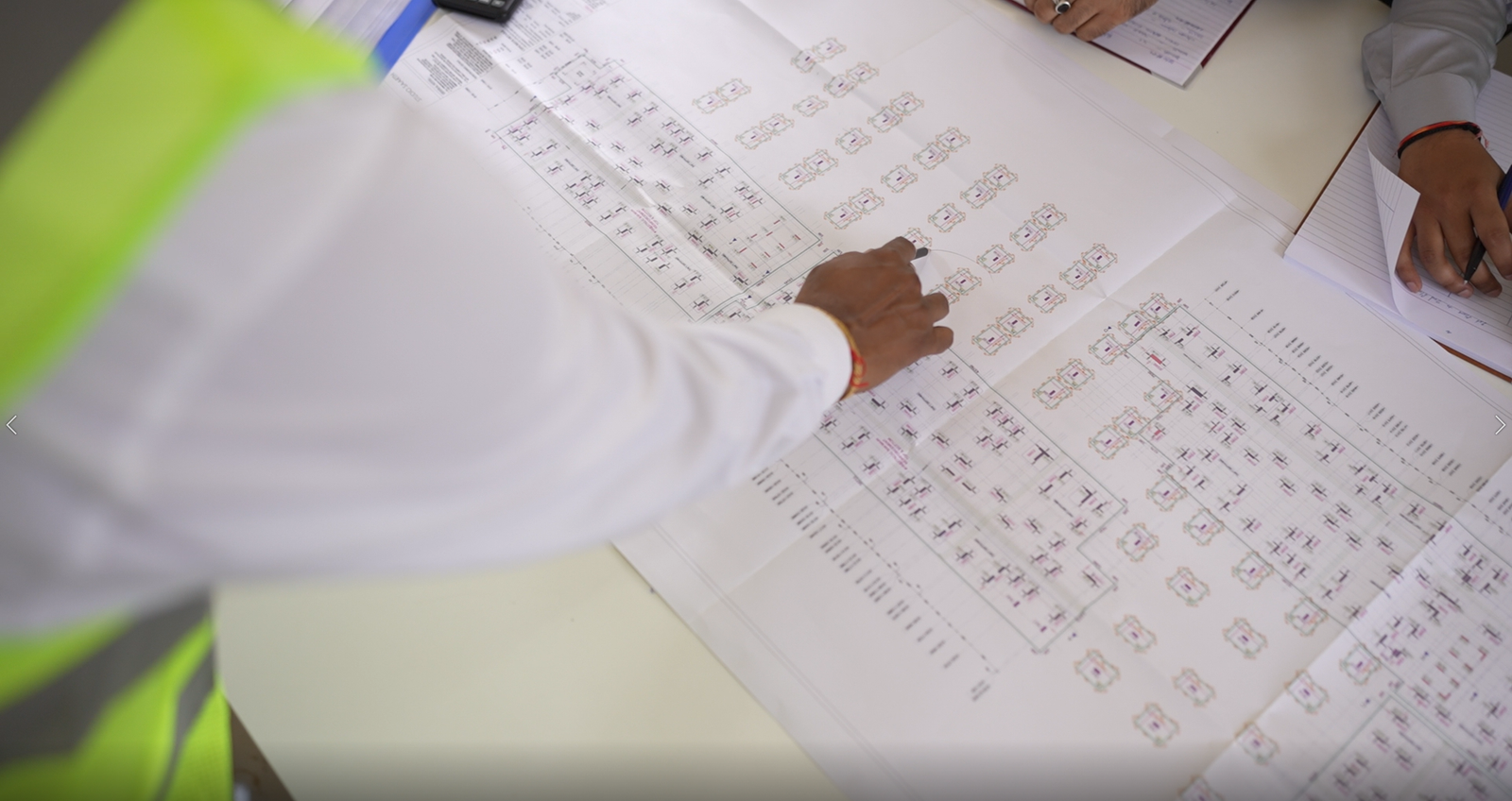
The equipment arrives on a specific date. The building must be ready before that date, floors cured and load-rated, power infrastructure commissioned and tested, drainage operational, clearances in hand. Dhinwa programmes factory projects backwards from the equipment installation date, not forwards from the mobilisation date.

Industrial Construction.
What Dhinwa Is Equipped to Build
Rajasthan's industrial corridor, Jaipur, Neemrana, Bhiwadi, Sitapura spans manufacturing, warehousing, processing, and light-to-heavy industrial facilities. Each type has a different structural brief.
Six Requirements That Do Not Exist
on Any Other Building Type
A contractor who has only built residential or commercial buildings will encounter each of these requirements on a factory project for the first time. Resolving them during construction rather than before it is what causes industrial projects to delay and overspend.
Built Around the Equipment Schedule.
Not Around the Contractor's Convenience.
Every decision in industrial construction from the structural system to the floor specification to the power infrastructure exists to serve one outcome: a building that is ready to receive its equipment and begin production on the owner's schedule.
The factory owner's equipment delivery date is the fixed constraint. Dhinwa begins every industrial project by confirming that date and programming backwards: when must floors be complete and cured to accept equipment loads, when must power infrastructure be commissioned and tested, when must the building be handed over with all clearances in hand. Construction planning serves the production schedule not the other way around.
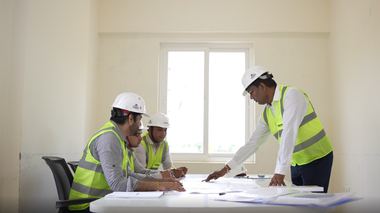
Before any structural design is finalised, Dhinwa obtains the equipment schedule from the owner machine types, weights, footprints, foundation requirements, and utility connections. The structural engineer designs the floor slab, foundations, and frame around these loads. The electrical engineer sizes circuits per the connected load list. Discovering mid-build that a slab is under-designed for a machine is a planning failure we avoid upfront.
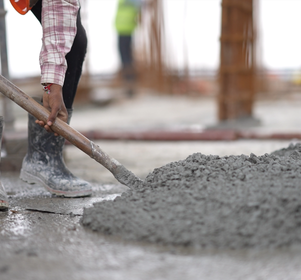
Industrial floors must be flat to tight tolerances for racking, load-rated to the equipment schedule, finished to the appropriate surface specification (hardener, epoxy coating, or standard OPC), and cured for the full specified period before any loaded access. Dhinwa's floor execution follows the specification without compression because a failing floor cannot be repaired without halting operations.
Industrial construction involves multiple regulatory authorities RIICO for building plans, RSPCB for consent to establish, fire authority for NOC, and factory inspector registration. Dhinwa tracks each clearance as a programme milestone applications submitted at the right stage of construction, not after completion when the production launch is already at risk. The owner should not be managing regulatory timelines.
Expansion of a factory in operation requires construction logistics that protect production continuity. Vibration from piling must be managed adjacent to precision manufacturing. Dust must be contained away from clean environments. Utility interruptions must be scheduled during planned production shutdowns. Dhinwa plans live-factory construction logistics before mobilisation.
How a Dhinwa Factory Project
Is Delivered on the Production Schedule
Six stages. The equipment installation date is confirmed in Stage 1 and governs every stage that follows.
What Mr. Vikram Agarwal
of OM Manglam Says
Mr. Agarwal evaluated Dhinwa as a vendor which is how industrial and commercial clients approach a contractor relationship. His assessment focuses on three qualities that matter in an industrial context above all others.
We've worked with many firms, but Dhinwa Construction and Engineering stands apart. Their clarity, integrity, and mutual respect make them a vendor's ideal client consistent, fair, and committed.
Clarity. Integrity. Consistency. In an industrial project where the contractor is responsible for a building that must work on a specific date, these are not soft qualities they are the three things that determine whether the production launch happens or not.
Independently Certified.
Directly Applicable to Industrial Construction.
ISO 14001 environmental management is directly relevant to industrial construction particularly for facilities in Rajasthan's RIICO zones where RSPCB consent to establish requires evidence of environmental management systems. ISO 45001 safety management applies with particular force on industrial sites where heavy equipment, lifting operations, and high-voltage electrical work run simultaneously.
Factory Construction in Jaipur
What Manufacturers Actually Ask
Eight precise questions from industrial operators, answered directly.
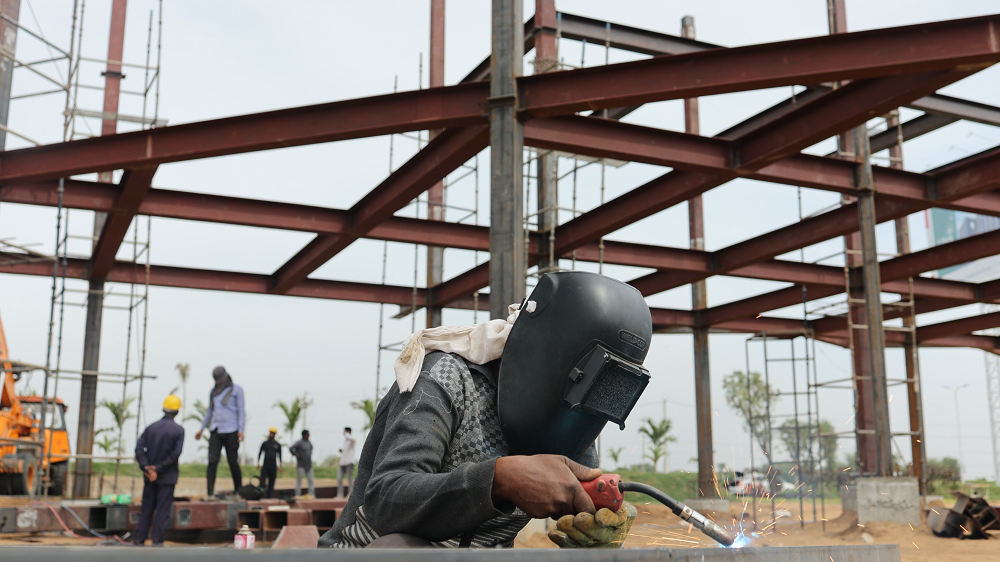

Your Equipment Has a Delivery Date.
Your Building Needs to Be Ready Before It.
Industrial construction that is not programmed to the equipment schedule always creates the same problem: a production launch that cannot happen because the building isn't ready. Send us your project brief and equipment schedule — we'll show you how we programme it so that problem doesn't arise.