Dhinwa Construction — Mega Menu v2
5th Floor, Sunny Mart, Mansarovar, Jaipur
Hospital Construction Company in Jaipur, Rajasthan | Dhinwa Construction
Service Page · Healthcare Infrastructure

Hospital Construction Company
in Jaipur, Rajasthan

Healthcare infrastructure built to the standards that licensing authorities, NABH assessors, and clinical teams require — not just the standards a contractor finds convenient.

Turnkey (EPC) Civil & Structure MEP Coordination Finishing & Fit-Out Phased Construction
2 Healthcare Projects Under Construction
ISO ×3 Quality · Safety · Environment
0 Abandoned Projects — Ever
7 Yrs Jaipur, Est. 2018
Why Healthcare Is Different

A Hospital is Not a Building.
It is a Clinical Machine.

A residential tower can tolerate a sequence change. A hospital cannot. The infection-control zones, the sterile corridor separations, the medical gas pipeline routing, the structural loads for imaging equipment — every one of these is a constraint that must be resolved in the drawing before a single column is poured. Change the sequence later and you do not just lose time. You lose the compliance that allows the facility to operate.

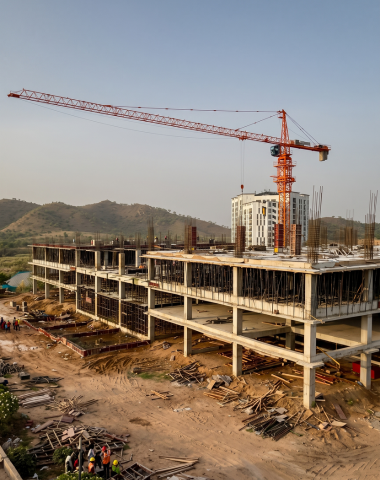
Dhinwa has built Nirwan Medical College and JNU Hospital in Jaipur. Both projects required coordination between civil structure, MEP infrastructure, and clinical planning teams — simultaneously. That coordination experience is what separates a hospital construction contractor from a contractor who has simply never been told no by a licensing authority.
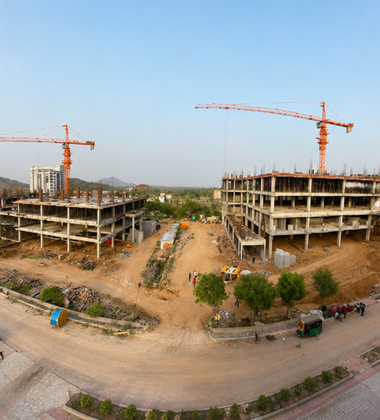
Hospital building exterior under construction in Jaipur
Healthcare Infrastructure · Jaipur, Rajasthan
Facility Types

Healthcare Facilities
We Are Equipped to Build

Each facility type carries its own regulatory framework, its own engineering requirements, and its own handover sequence.

01
Multi-Specialty Hospitals
Full-facility hospital construction — OT blocks, ICU infrastructure, wards, diagnostic wings, and support services in a single coordinated build.
02
Medical Colleges & Teaching Hospitals
Combined clinical and academic infrastructure — lecture blocks, skill labs, hostel accommodation, and hospital wards built to a unified programme.
03
NABH-Grade Facilities
Construction aligned to NABH accreditation standards — infection control zoning, corridor width compliance, fire-safety infrastructure, and documentation trail for assessors.
04
Diagnostic & Imaging Centres
Structural provisions for MRI, CT, and radiology equipment — including shielding requirements, vibration isolation, and floor-load ratings specified by OEM.
05
Daycare & Clinic Campuses
Smaller-footprint clinical facilities requiring the same MEP precision and zoning discipline as full hospitals but on tighter programmes.
06
Hospital Expansion & Phased Works
Expansion construction on live campuses — sequenced to keep existing clinical operations running while new wings are built and commissioned alongside.
Compliance & Standards

What a Hospital Build
Must Get Right — Before Structure

Most construction delays in hospital projects do not happen during building. They happen at the licensing stage — because the building was not designed and documented to meet the framework the authority inspects against.

NABH Accreditation Standards
Corridor widths, patient-zone separation, nursing station placements, and infection-control zoning must be resolved in the layout before construction. We work alongside the hospital's clinical planner to ensure the built environment matches what the assessor will inspect.
Medical Gas Pipeline Systems (MGPS)
Oxygen, nitrous oxide, medical air, and vacuum pipelines must be routed, tested, and documented before walls are closed. Coordination with the MEP contractor and MGPS vendor starts at the structural stage — not after.
Infection Control During Construction
For expansion projects on live campuses, ICRA protocols govern dust containment, air pressure management, and access segregation. Our sites on live campuses are managed to clinical-grade infection control standards.
Fire Safety & NBC Compliance
National Building Code and state fire authority requirements for hospitals are more demanding than for residential or commercial buildings. Fire compartmentation, exit widths, refuge areas, and sprinkler zoning are designed in — not added later.
Imaging Equipment Structural Provisions
MRI, CT, and C-arm equipment requires structural provisions — additional slab reinforcement, vibration isolation details, and lead or barium shielding in walls — that must be specified before the slab is cast. We coordinate with OEM documentation at the structural design stage.
Electrical & Backup Power Systems
Hospital electrical design requires essential power circuits, UPS provisions for critical areas, and DG backup with automatic changeover — all of which affect the civil layout of plant rooms and cable routes. Electrical engineering is coordinated from the structure stage, not the finishing stage.
How We Execute Healthcare Builds

The Systems Behind a
Hospital That Passes Inspection

Clinical infrastructure has a different failure mode from any other building type. Dhinwa's execution model for healthcare projects is built around eliminating that failure at the source.
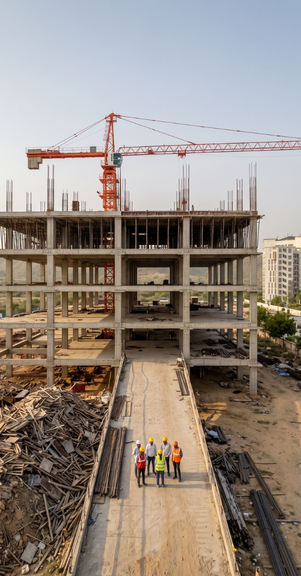
Architect and engineer reviewing hospital construction drawings
Clinical Coordination
01
Clinical Planning Coordination

Before a hospital project goes to structure, the clinical layout — OT locations, ICU bed counts, corridor hierarchy, and department adjacencies — must be frozen. Dhinwa's project team works directly with the hospital's clinical planner and architect to resolve these decisions before mobilisation. Changes after structure begins cost more than the entire pre-construction coordination effort.

02
MEP-First Structural Planning

In hospital construction, the structure serves the MEP — not the other way around. Medical gas pipelines, HVAC duct routes, high-voltage cable trays, and fire-fighting lines dictate where beams can and cannot be placed, where slab penetrations are required, and what chase and shaft sizes must be built in. We resolve this coordination before the structural drawing is issued for construction.

03
Phased Commissioning Planning

Most hospital projects open in phases — the OPD wing first, then IPD, then the OT block. Each phase must be completed, inspected, and certified before it can receive patients. Dhinwa sequences the construction programme and MEP commissioning to match this clinical opening sequence — not the other way around.

04
Documentation for Licensing

Licensing authorities and NABH assessors inspect documentation as much as they inspect the building. As-built drawings, material test certificates, MEP testing records, fire NOC documentation, and lift inspection certificates must all be organised and current. Dhinwa's project team maintains this documentation trail from structure stage — not assembled as a final-week scramble before inspection.

05
Live Campus Protocols

Expansion projects on operational campuses require a different site management discipline. Dust containment barriers, segregated access routes for construction workers, noise management protocols during clinical hours, and vibration controls near sensitive diagnostic equipment — all documented, monitored, and enforced daily.
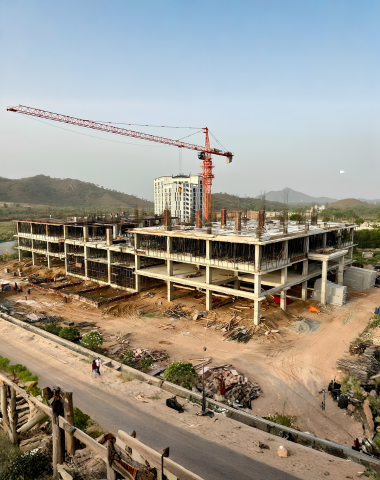
Hospital construction site with MEP systems installation in progress
6 Phases
Delivery Process

How a Dhinwa Hospital
Project Is Delivered

Healthcare projects have a longer pre-construction phase than any other building type — and they should. The decisions made before mobilisation determine whether the facility opens on schedule or spends six months at the licensing stage.

01
Clinical Brief & Regulatory Scoping
Project brief established alongside the hospital's clinical planner and management. Regulatory framework identified — NABH, NBC, state health authority requirements. Licensing strategy agreed before architectural design begins.
02
MEP & Structural Design Coordination
MEP consultant engaged alongside the structural engineer — not after. Medical gas pipeline routing, HVAC zoning, electrical circuit design, and structural provisions for imaging equipment resolved before construction drawings are issued.
03
Programme Locked to Clinical Opening Sequence
Master programme issued with phase-wise completion dates matching the hospital's planned clinical opening sequence. Each phase has its own inspection and commissioning milestone — not a single handover at the end.
04
Structure & Civil Execution
RCC and civil works executed with the same in-house discipline applied to all Dhinwa projects — cube testing, documentation sign-off, quality checklists. Healthcare-specific provisions constructed exactly as coordinated in Stage 2.
05
MEP Installation & Commissioning
Medical gas systems tested and certified before walls are closed. Electrical circuits tested zone by zone. HVAC commissioned with pressure testing for sterile areas. Each system commissioned against the specification, documented, and handed over with test certificates.
06
Inspection-Ready Handover
Complete documentation package assembled — as-built drawings, material certificates, fire NOC, lift inspection, MGPS certification. Handover is not the completion of construction. It is the readiness of the facility to face a licensing inspector.
Healthcare Track Record

Healthcare Infrastructure
Ongoing in Rajasthan

Two major healthcare facilities built in Jaipur. Both required coordination across clinical planning, MEP systems, and regulatory compliance simultaneously. Both were completed and handed over.
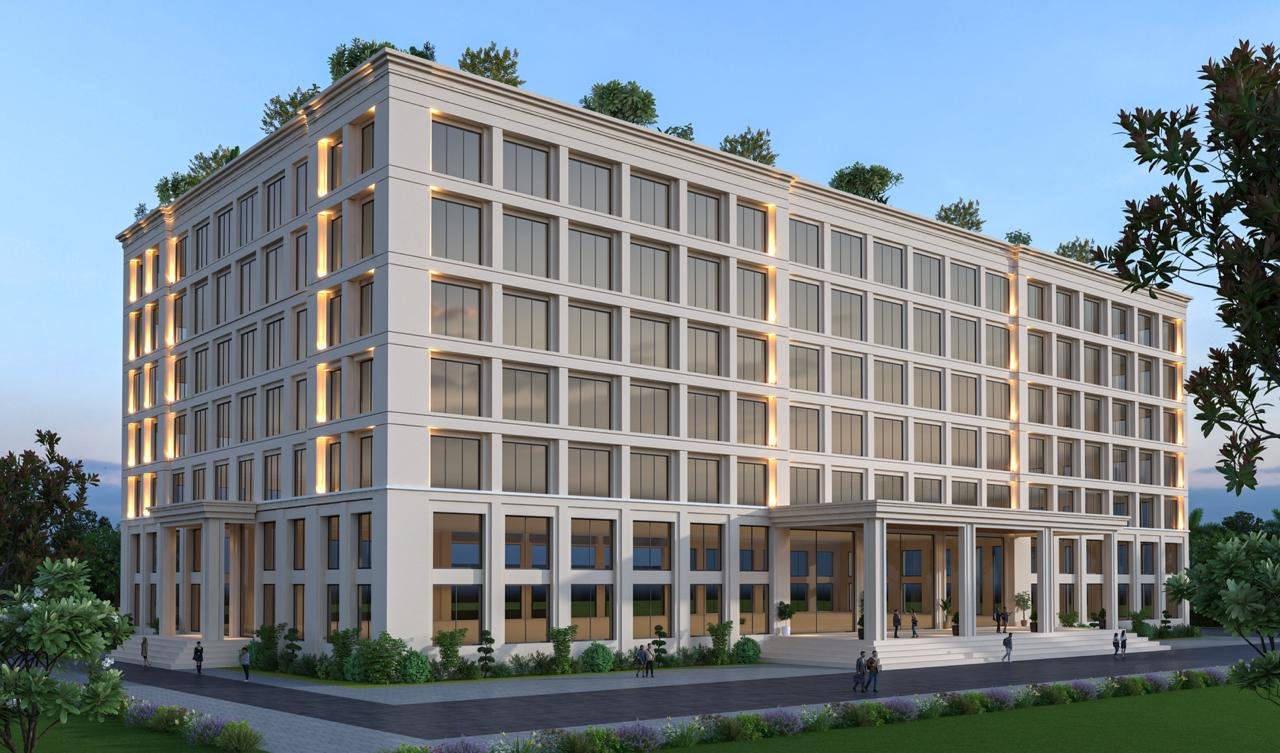
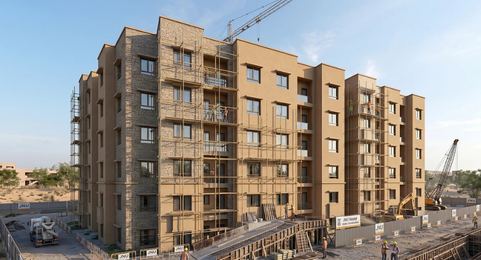
2 Healthcare Projects
Nirwan Medical College and Hospital Jaipur
Nirwan Medical College & Hospital
Jaipur, Rajasthan
Medical College
Combined Teaching Hospital + Academic Block
Under Construction
JNU Hospital Jaipur full facility healthcare infrastructure
JNU Hospital
Jaipur, Rajasthan
University Hospital
Full-Facility Healthcare Infrastructure
Under Construction

Dr. S.L. Sihaag of Nirwan Institutions started with one project. He is now on a second. In healthcare construction, a returning client is not a satisfaction score — it is the only endorsement that carries any weight.

Client Testimonial

From the Chairman of
Nirwan Institutions

Dr. S.L. Sihaag did not give a second campus project to Dhinwa because of a proposal. He gave it because the first phase was delivered — and he saw what that meant in practice.

"

I initially started with just one project with them, and seeing their commitment to quality and speed of development, we are now working together on multiple projects. Even though the work is still ongoing, the experience so far has been very positive. It is reassuring to collaborate with a team that truly lives by their values at every stage.
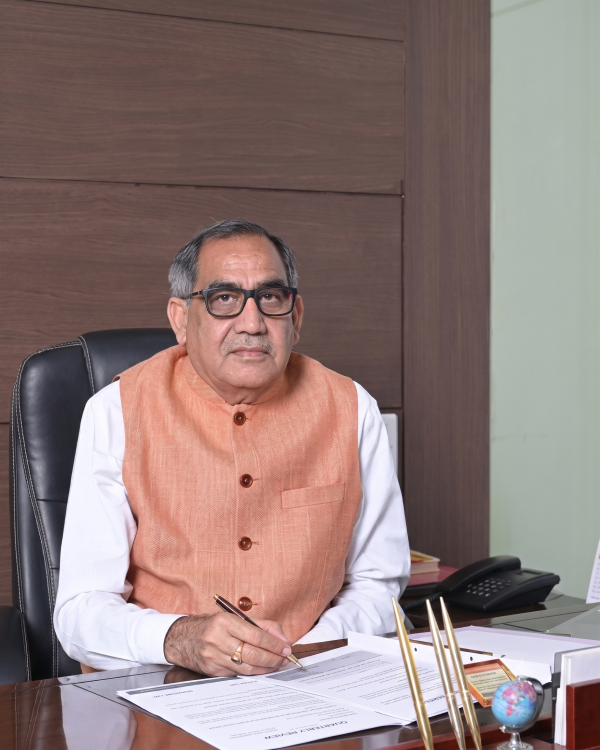
Dr. S.L. Sihaag
Chairman, Nirwan Institutions — Nirwan Medical College, Jaipur
University campus institutional building
Certifications & Registrations

Independently Certified.
Relevant to Healthcare Standards.

ISO 45001 safety management and ISO 9001 quality management are not decorative certifications in a hospital construction context. They are the audit trail a licensing authority or NABH assessor can reference.

ISO 9001 Quality Management · 2015
ISO 45001 Safety Management · 2018
ISO 14001 Environment · 2015
Class AA RHB Contractor · Rajasthan
Frequently Asked Questions

Hospital Construction in Jaipur —
What Developers Actually Ask

Eight questions answered directly — no qualification, no hedge.

Construction engineer reviewing hospital MEP coordination drawings
Q Has Dhinwa Construction built hospitals before, or is healthcare a new area for you?
We are working on two major healthcare projects in Jaipur — Nirwan Medical College and Hospital, and JNU Hospital. Both involved coordination across clinical planning, MEP systems, and regulatory compliance. The chairman of Nirwan Institutions gave us a second project after the first. Healthcare infrastructure is not new to us.
Q Do you understand NABH accreditation requirements and how they affect construction?
Yes — and critically, we understand that NABH requirements must be designed into the building before construction, not retrofitted after. Infection-control zoning, corridor width compliance, nursing station placement, and fire-safety compartmentation are resolved at the layout stage in coordination with the hospital's clinical planner.
Q How do you handle MEP coordination for medical gas pipelines and critical electrical systems?
MEP coordination starts at the structural stage — not after structure is complete. Medical gas pipeline routes, HVAC zoning for sterile areas, and electrical circuit design for critical loads are resolved before construction drawings are issued. MEP contractors are engaged in the pre-construction coordination, not introduced at the finishing stage.
Q Can you build on a live hospital campus without disrupting existing clinical operations?
Yes. Expansion projects on live campuses require ICRA protocols — dust containment, air pressure management between zones, segregated access for construction workers, and noise management during clinical hours. We have operated under these constraints and can document compliance with clinical infection-control requirements.
Q What structural provisions do you make for imaging equipment like MRI and CT scanners?
MRI, CT, and other heavy imaging equipment requires structural provisions that must be cast into the slab — additional reinforcement, vibration isolation details, and shielding specifications. These are coordinated with the OEM's technical documentation before the relevant slab is poured. You cannot add these provisions after the structure is built.
Q How do you manage the documentation required for hospital licensing?
Documentation is maintained throughout the project — not assembled at the end. As-built drawings are updated continuously. Material test certificates, MEP commissioning records, fire NOC documentation, and lift inspection certificates are filed as each system is completed. When a licensing inspector arrives, the documentation is ready — not being compiled overnight.
Q What is the minimum project scale you work on for healthcare construction?
Our healthcare projects have been large-scale facilities — medical colleges, teaching hospitals, and full-service hospitals above 1,00,000 sq. ft. Smaller clinic or daycare projects within a larger campus development can be discussed depending on scope.
Q How are hospital construction projects priced differently from residential projects?
Healthcare projects carry a higher per-square-foot cost than residential due to MEP complexity, infection-control requirements, specialised finishes in clinical areas, and the documentation burden for licensing. We provide a detailed cost breakdown based on the specific facility type, regulatory framework, and phasing plan — not a generic rate per square foot.

Planning a Hospital in Jaipur?
Start the Discussion Early.

Healthcare projects that begin construction without resolving clinical planning, MEP coordination, and regulatory compliance typically spend more time at the licensing stage than in construction. Send us the brief and let's map the pre-construction sequence before a single drawing is issued.

Nirwan Medical College · JNU Hospital · ISO 9001 · ISO 45001 · RHB Class AA